Cuba in my heart, now and then
February 25, 2026
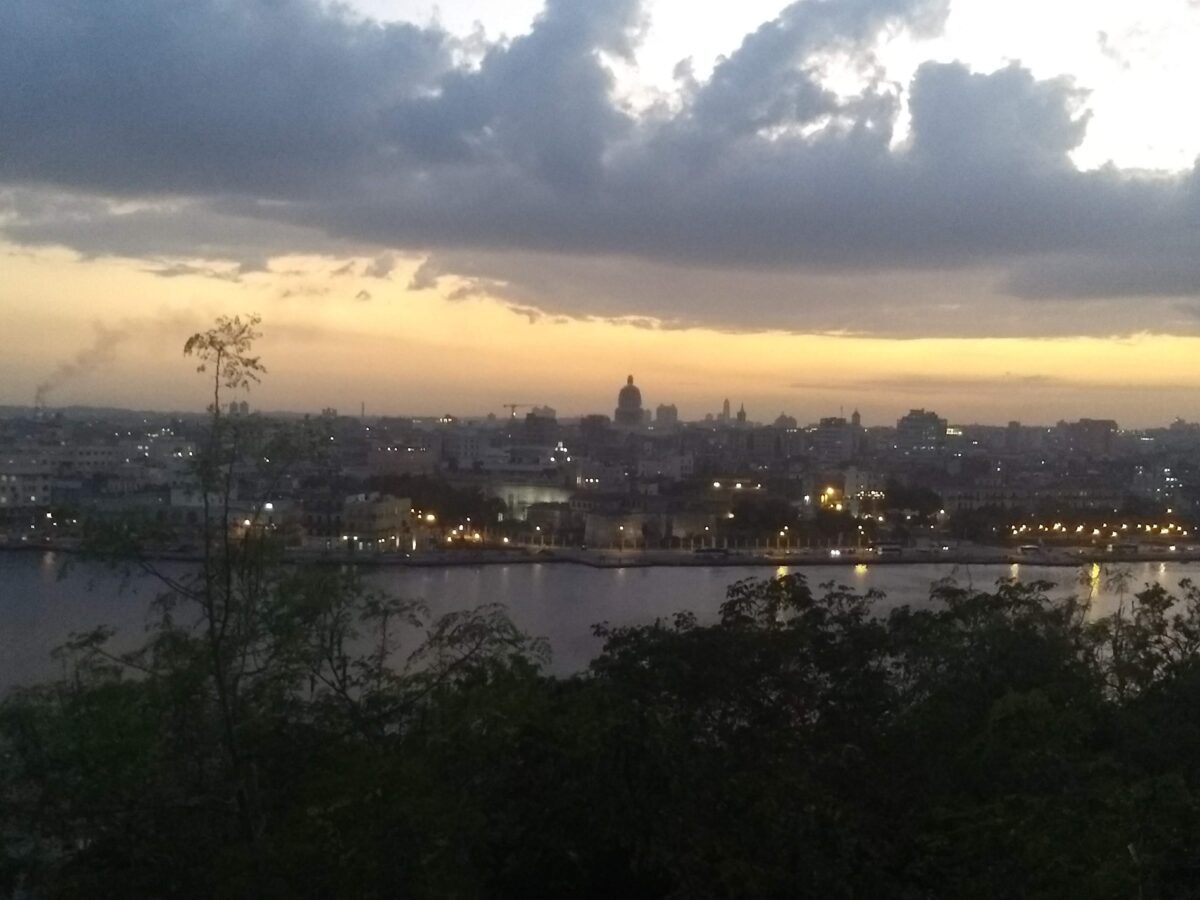
I am really throwing a lot at you here today. Read this in bits and pieces as convenient. Three essays plus commentary on Cuba’s current situation? Who has time for this! But here it all is, in honor of a frigid February escape some years back, and a country that’s still stuck in my heart, and you are forewarned.
In 2019 I traveled with dear friend Elaine to Cuba. She had airline vouchers to use up and called me to consult about what European capital she should go to. I have a bias toward North America that may actually be owing to phobias, so I suggested several shorter, more local trips. “Or,” I offered, “you could go to Cuba.” This was like a magical incantation to her and had an immediate effect. Her husband would never want to go–but she did! And I would go with her! And literally before I had a chance even to mention this to my husband, plane tickets to Cuba had been procured, one for me, one for Elaine. It was a great, and greatly unexpected, adventure. I wrote three essays about our breathtaking time there–really just reflections on a little over a week in a place that I knew nothing, whatsoever, about. It’s a place of great natural beauty and interesting people–hardworking, resourceful, creative, thrifty, determined to succeed despite their considerable challenges.
Since our trip in 2019 these challenges have exponentially increased. It pains me to consider how much the US is directly responsible for the struggles Cuba has faced for decades because of sanctions and embargoes in place since the 1960s. And it is unimaginably worse now. In the wake of his toppling of the of Venezuelan government, which supplied much of Cuba’s oil, Trump has prevented any shipments of oil from getting to Cuba and threatens to tariff any country who might wish to try. How this is the unilateral right of the US in all the globe is unclear to me. But it is a choice our administration is making daily, choosing daily to squeeze the life out of an already poor and suffering populace.
And I do mean squeeze the life out of. With 18-hour-a-day blackouts, children who are ill or have special needs can’t rely on medical equipment that cannot operate. Cuba’s infant mortality rate has nearly doubled since 2018. Hospitals are being forced to close, public transportation is not running, already-scarce food supplies are failing to reach where they’re needed. The number of people going hungry and sleeping on the streets grows every day. Airlines won’t fly there any longer because they cannot refuel. Schools are in session half time. Hotels have closed and the bottom has fallen out of the tourism industry. Trash cannot be picked up so people are burning it themselves, leaving Havana in a toxic haze of smoke. And Trump and Secretary of State Marco Rubio watch, aware, jubilant that the country will be sure to buckle soon. They’re waiting for the full collapse, the complete humanitarian crisis. Trump is certain he can bring Cuba to its knees. Republicans, even Cubans, say things like, Yes, it’s hard to imagine a mother who cannot feed her children, but we’re hoping for long term gains out of short term suffering.
Honestly, it’s ghoulish.
You may think a Communist nation has no right to exist, or that Cuba’s current political situation is not good, or that regime change is necessary. These are legitimate questions to debate. But for the US to unilaterally impose large-scale death and destruction to reach a goal that primarily benefits (?) the US, moves beyond the realm of political strategy and into the realm of violent torment. Basically an unprovoked act of war. All of Cuba’s nearly 11 million people are currently on the receiving end of this effort. Do you wonder why even one child with cancer must be intentionally sacrificed for a US geopolitical goal? I do.
Here are some well-researched resources, arranged from centrist to more partisan sources. The last item in the list is a blog by Cubans in Cuba who are political dissidents. (I found this shortly after we returned from Cuba and I’ve been keeping tabs on it ever since.)
CNN: “No food, no fuel, no tourists: Under US pressure, life in Cuba grinds to a halt”
ABC News: “Cuba’s health care system pushed to brink by US fuel blockade, minister says”
Newsweek: “Trump’s Oil Blockade of Cuba is Economic Violence. It Must End”
Time: “Rolling Blackouts, Hospital Shortages: How the US Oil Blockade is Impacting Cuba”
Common Dreams: “‘What did these children do to Trump?’: US Embargo blamed as Infant Mortality Soars”
The Antagonist: “Pregnant Women, Children, and the Elderly at risk due to US Oil Blockade of Cuba”
14Ymedio in English: Translating Cuba; in Spanish: 14ymedio
Now that I’ve bummed you out completely, let’s get to the stories, which range from the sobering to the decidedly un-sober. Here is the Cuba, and here are the Cubans, we experienced on our visit. I often think of the wonderful people we met, all of whom were extremely resourceful. It’s my hope and prayer that they have a still deeper well to draw from as they face this current crisis.
1. The practicality of a good straw hat
Stopping merely to look at some hats in the streetfront tourist shop, Elaine and I were easy marks for the vendor. But I already had a hat, I assured him. I’m just looking. That smooth-talking, flattering, flim-flammer wove his spell and somehow within 10 minutes we both had new hats. So now I had two.
_______________
In Havana we wanted to experience everything we could fit into the span of a week. It would likely be our only trip here in our whole lives. My friend and I were in our mid-50s and finally had time and opportunity to do a trip like this. The imperative was to meet as many people as possible and do as many classic Cuban things with Cubans as we could manage. This was the reason that I agreed to let Elaine sign us up for a cocktail class, non-drinker that I mostly am. In this class, I imagined, I could work on my Spanish, learn a lot of history, and get a proper mojito–a drink I did enjoy once in a while.
So far we had found everyone we met to be open, generous, and kind, honest about their lives and their sorrows, yet resourceful, even joyful, in the face of challenges. Most people that we met knew at least a little English; many were fluent; and all listened generously and encouragingly to my limited Spanish. To no doubt grossly overgeneralize, Cubans were a huge pleasure to hang around. The Americans we met were somewhat swept along by this spirit and were also very friendly and open, which brings us back to the cocktail class.
The setting was an open air courtyard of a private Havana club, closed to all other diners for our event. We sat in comfortable outdoor lounge chairs in a beautiful shaded garden. We’d spent hours on a sweltering walking tour through the city already that day. I was grateful for the pale blue, corrugated sun shade over our heads, even though whenever a hard unripe mango dropped from the tree above us, which was not infrequent, the hard plastic roof made a sound like a gunshot blast.
Our cocktail companions were a mother and a daughter from Washington DC, the daughter a global traveler in her 20s and the mother a retired elementary school principal who came along with her girl just this once. The daughter explained to the hosts that her mother was a teetotaler and would be having non-alcoholic versions of every drink. The two of them were ideal companions for the evening–the well-traveled daughter with her poise and grace, the mother with her wealth of wisdom. I took the opportunity to complain with her about the problems with public education underinvestment. We all talked about travel, and raising children, and American politics, and even before any drinking had transpired we were all best friends.
Our mixologist was a highly trained sommelier who knew absolutely everything about the entire history of rum in Cuba and the origin stories of Cuba’s iconic drinks. A lovely translator relayed everything the mixologist said and in spare moments shared a lot about her own life, so before long she was another new best friend.
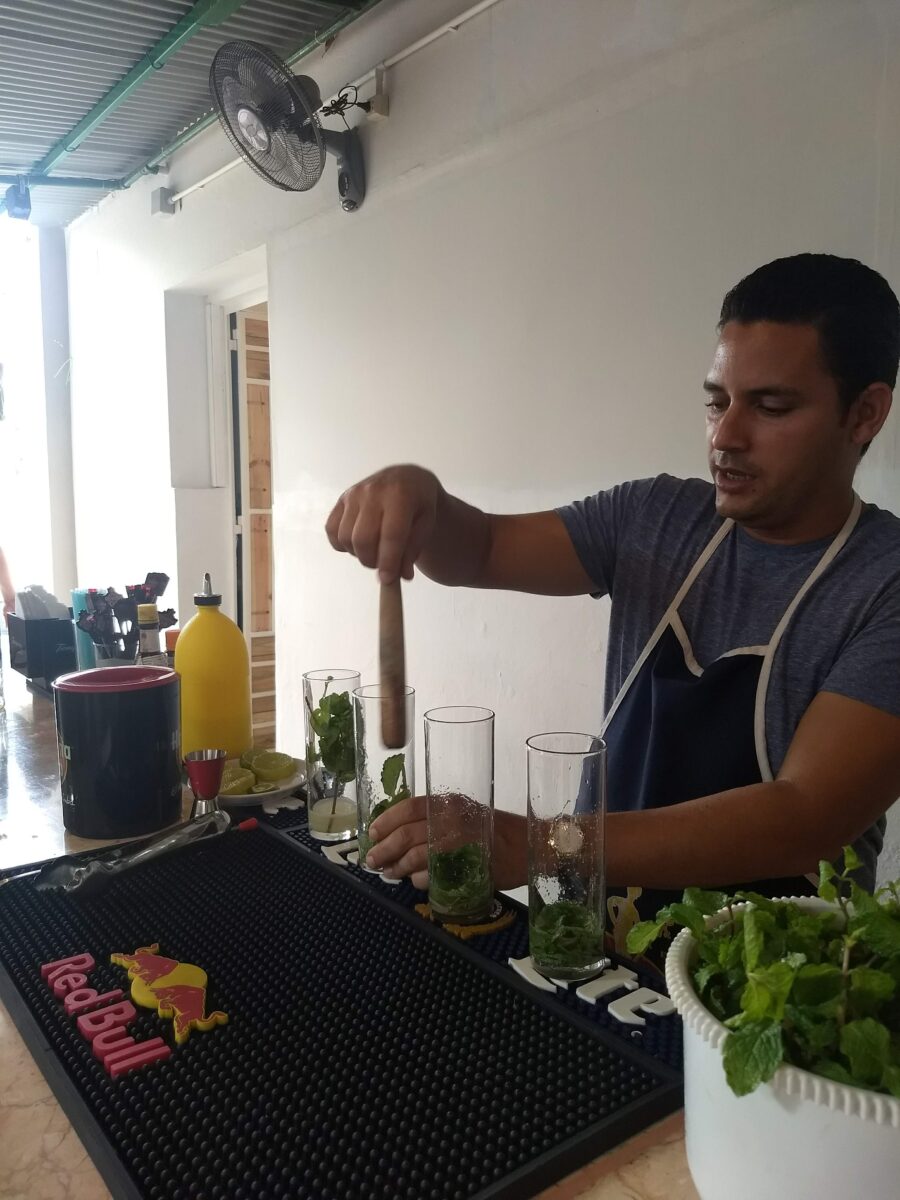
We compared worries over Trump, complained together about American embargoes, and speculated whether or not Cuba was a dead end for young people and if leaving was the only option. (Related: leaving is not an option.) The shadows grew longer in the cool of the day. Between long political digressions, we learned to make drinks.
First up was the Daquiri, dating back, astonishingly, to the Spanish-American War. The word daquiri comes from Taino, the language of the earliest indigenous people of Cuba. We were taught to make this drink in a tall narrow glass with ice, sugar, lime, and the finest Cuban rum. Our sommelier made us each one, and a virgin one for the teetotaling principal mom, and it went down cold and smooth after the hot afternoon. Cold, smooth, and alarmingly buzz-delivering, so I was grateful when a huge plate of appetizers was brought out for each of us. I gobbled everything down, hot and fresh from a deep fryer, without even wondering what I was eating. Like all the food we’d eaten in Cuba, it was delicious!
Still feeling alarmingly buzzed I asked for the next round virgin. We were looking at 4 full-sized rum drinks and I knew I wasn’t going to last past round 2 without pacing myself a little. Elaine, let’s just say she’s a comfortable drinker, made merciless fun of me and egged me on like a frat boy. My resolve held as I sipped my rumless Coke. The deceptively simple rum-and-coke–in Cuba, the Cuba Libre–traces its origin to the Free Cuba movement in the aftermath of the Spanish-American War. Properly made with a critical squeeze of lime, its origin is shrouded in about as much fog as was filling my head. Nevertheless after I downed my Coke I figured it was now time to jump back into the fullness of the experience before me, and so I charged ahead with the next drink made properly, the immortal Mojito.
The afternoon faded into evening and Elaine was getting loud. I was getting sleepy, wanting to settle down for a nap with all my new best friends. Instead I rousted myself for the Mojito–another drink with a very old origin, perhaps as far back as Sir Frances Drake landing in Havana in the 1580s (which maybe he did, maybe he didn’t, it might’ve been Hispaniola, it might have been an invasion, or his crew might’ve been devastated by scurvy, who could know), but definitely made famous by Hemingway and his quite competent drinking skills. My Mojito was simply perfect, cold and tart and sweet and minty, and I slurped it down enthusiastically as the sun set.
I returned to the public education conversation, warming loudly to the topic, sharing my smartest bon mots and protracted philosophical rantings about things that had happened years ago in the Chicago school system, which incidentally I had written about at length. I had a lot of insider knowledge and expertise and I had to share it. Elaine warmed to the topic of rum. We were witty and gregarious. Our clever conversation flowed, perhaps, over the banks of decorous discourse and might possibly have somewhat overwhelmed the voices of our friends, but it was a night beneath the starry Havana sky with trees dropping hard mangos, and we were under a spell. We were spellbinding.
It was time to show off what we had learned. Up to the bar we each trotted, one by one, to make the drink of our choice. I…think I chose the Mojito. Probably because it was the one most recently made and I had some dim recollection of its ingredients since I had just seen this drink. We were to follow the proper procedure and were corrected (frequently) by the kindly, darling bartender, or at least I was. Apparently this was a competition for who made the drink the most correctly, and it was the 20-something world-traveling daughter in our midst, still comporting herself with poise, graciousness, and mad bartending skills, who ran away with the prize.
Now we paused from the mixed drink lessons and we were each brought a little glass of rum and a little adorable cup of Cuban coffee, with an additional puzzling dish of honey. Do not touch these yet! we were advised, and we obeyed though Elaine mouthed off about this prohibition. In due time we were brought the finest hand-rolled uncut Cuban cigars, one for each of us. We were given a knife to cut it properly, and taught the proper way to dip the end of your cigar into rum and honey, and sip the Cuban coffee between puffs of the cigar.
Puffs of the cigar. I grew up in a house of smokers and had never smoked anything in my life. I am incapable of even inhaling helium out of a balloon. But this cigar was–well, smoking it didn’t involve inhaling, so that was easy. It was simply–divine. Smoking a cigar the proper way. In a Havana garden. Under the stars. Smooth! Pleasant! Tasty! We sat in a happy haze of cigar smoke and I remember thinking, probably because I remember hearing myself loudly declare, “I regret nothing!” I think I said this because one of those puffs had accidentally gone down my throat and into my lungs. From somewhere deep within the recesses of my brain, where the annals of All That I Know About Cigars are kept, I knew that inhaling cigar smoke is not the thing. But there was nothing to be done, it was too late now. I kept dipping, puffing, and sipping away.
I continued to regret nothing as I became aware that, for sure, I was going to be sick, sooner or later. I was so hoping for sooner. I excused myself to the ladies’ room, walking in as slow and dignified a manner as I could muster, which was very slow but sadly not at all dignified. The hosts passed out our keepsakes–a cotton tote bag with a Bacardi-branded bartending apron, a bottle of rum, and a couple of cigars. I was gone for a while, sitting in a somewhat despondent but not regretful attitude on the bathroom floor. I began to hear my good, dear friends wondering what had become of me.
The hosts had kindly called a cab for us, and as all four of us were heading in the same direction, we would share it. I emerged from the ladies’ room feeling slightly more self-possessed and in sufficient time not to miss the cab, and there were warm, back-slapping embraces all around before we climbed in. Such a night we would never forget! Elaine sat in the front seat and jabbered away to the cabbie in an appalling blend of English and German with fervent gesticulation and small Spanish touches thrown in. She was busy making another new best friend. I squeezed into the back with the 20-something young woman and her mother. The fit was so tight I handed all my things up to Elaine, and it was a hot un-air conditioned Soviet car that smelled like it was from the 60s, because it was. I could not have recalled the names of those two nice ladies in the back seat with me if there had been a gun pointed at my head. I just knew that I was easily the oldest person in the car. I announced, perhaps not quite loudly enough, Everyone, please forgive me in advance as I will probably get sick in this cab. The young woman patted my back and said soothing things like you would say to your drunken sorority sister, hang on, honey, you’re going to be fine, you can do it, hang on. I said, Elaine, please hand me my hat, which she did without questioning, and continued her loud jabbering conversational assault on the cab driver. We pulled to a stop where our friends were to depart, and I proceeded to heave into my hat, as promised. “Oh, honey,” said my seatmate, beating a hasty retreat out of the car. Between heaves I bid our companions farewell, told them it was such a pleasure to meet them (heave), and I did hope their stay in Cuba was (heave) pleasant and memorable.
My tightly woven straw hat, the one I brought with me from home, which had been very cute by the way and I was not happy about its fate, held its contents securely for the remainder of our ride. I don’t think Elaine even realized what had transpired in the back seat. I’m pretty sure the driver didn’t. She paid up with a flourish of confusion and we staggered out onto the street. I made straight for the first trash can I saw and Elaine grabbed my wrist and said–no, no don’t do this! you can wash this hat! I hadn’t the strength to argue, I just dumped it right into the trash can, desperately hoping no one saw this little scene, and grateful that I had been pushed into buying a second hat that very morning. We limped to our room up the narrow stairs, which were frighteningly steep even when one was sober as a judge. It was 7 p.m. and we fell onto our beds and collapsed into rum-addled semi-comas.
Much later, I bequeathed to Elaine all the contents of my keepsake bag, for while I still regret nothing that transpired that hazy Havana night, I never want to see rum, or a cigar, or possibly a straw hat, ever again.
2. The most perfect coffee in the world
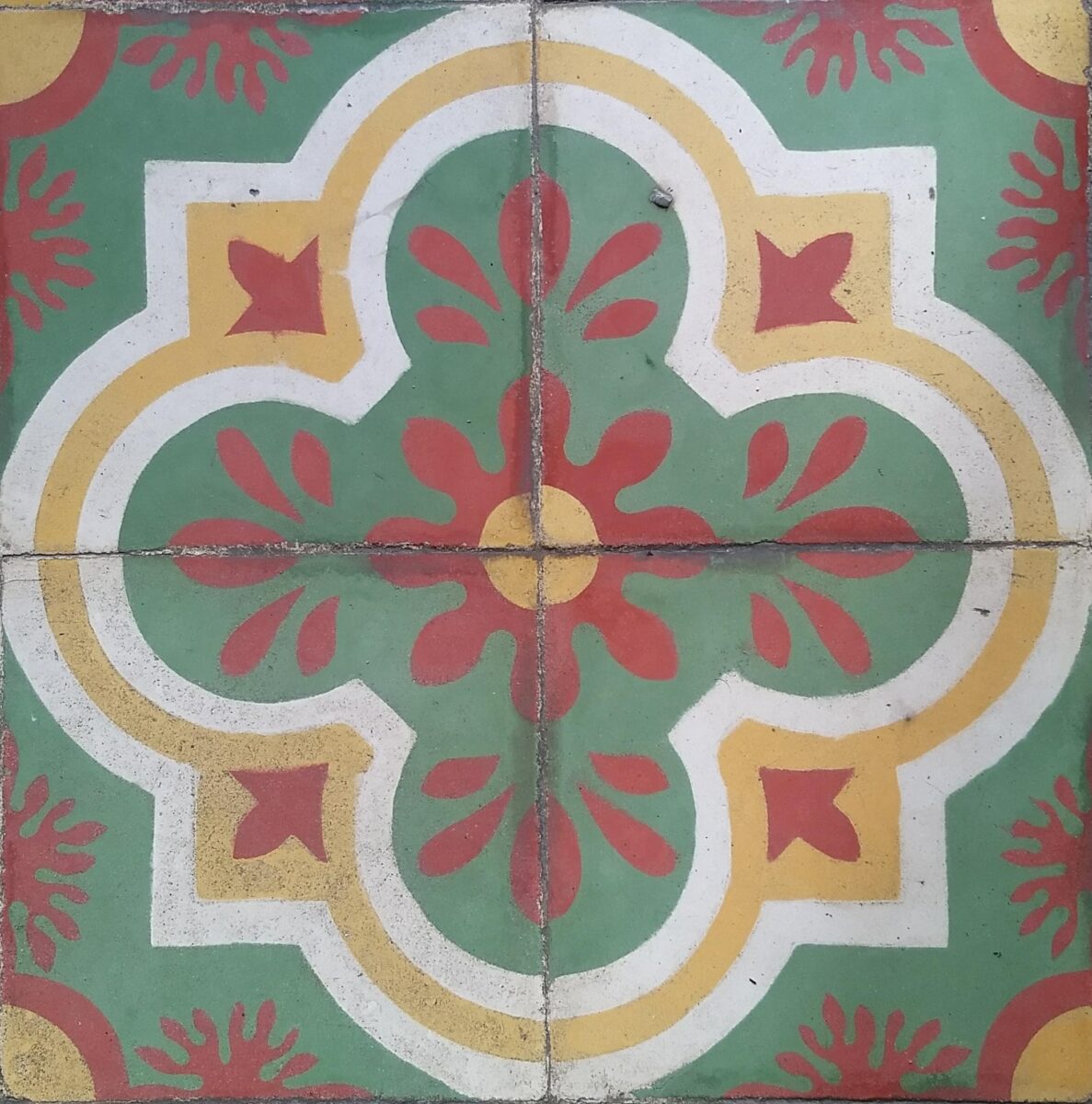
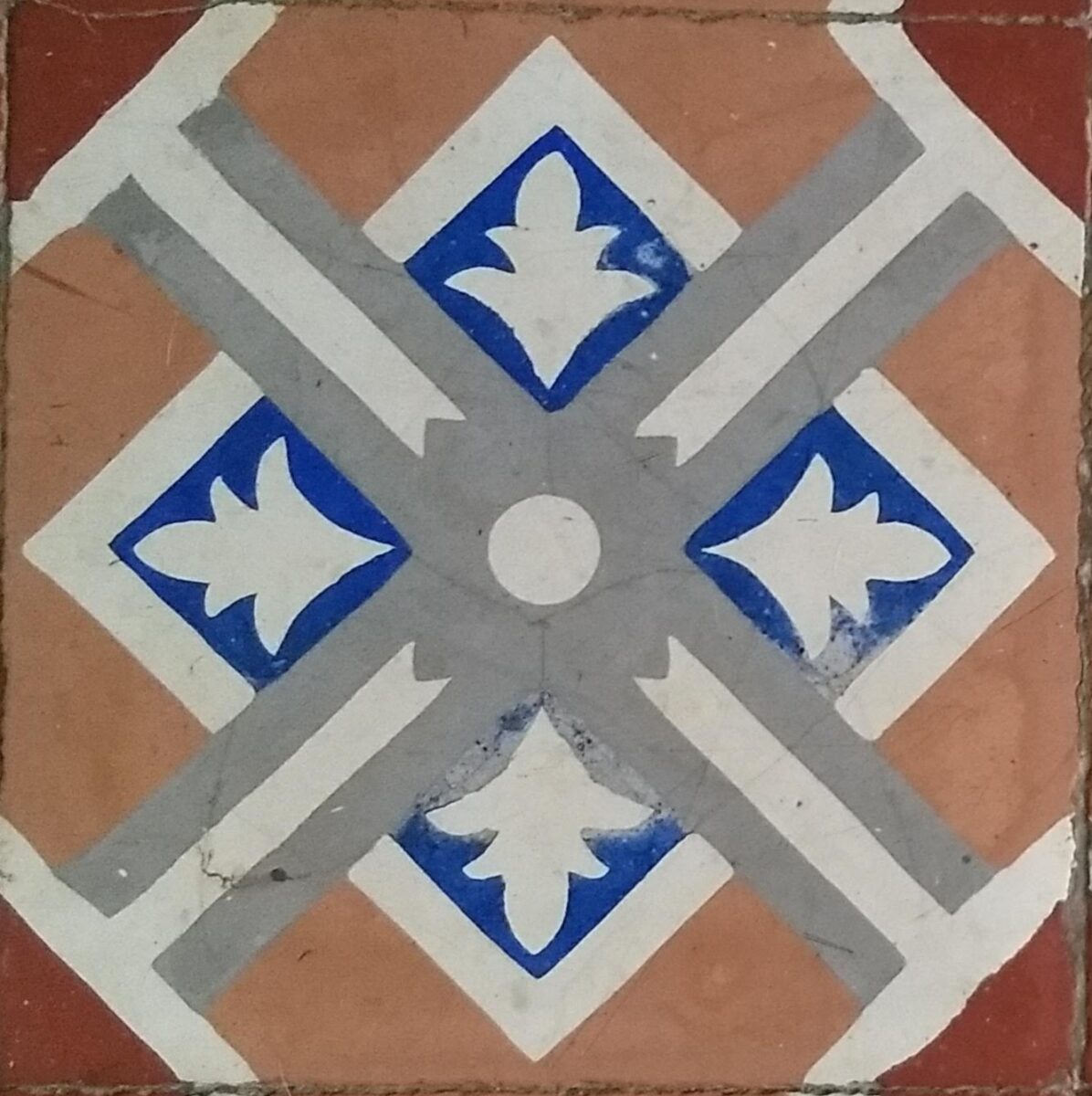
Our first morning in Havana we had no idea what to expect. Here we were, tourists in an oppressive Communist regime, one of the last such holdouts in the world. We had been told breakfast would be served in our home-based accommodations at a certain hour, so we sat down at the set table in the alcove. The first part of our breakfast that came out from the kitchen down a long rather poorly lit hall was Cuban coffee. It arrived in mismatched floral porcelain, a gleaming small pot with an upright shape like a coffee pot, and tiny lovely cups, shining in the sunshine that came through 5 foot tall open windows, heavy curtains pushed to the side. The alcove we sat in was lovely, a perfect textbook picture of 19th century splendor, if you used your imagination, only a little faded. The floor beneath us had three different coordinating patterns of original 19th century cement tile, an art form particular to Cuba. These patterns, my first acquaintance with this gorgeous tile, drew on art nouveau designs, but were bolder, simpler, and more stylized than anything I had seen before. And it is, we found, all over Havana.
We sat at a square dark wood table with a lace cloth. Our breakfast–eggs, tropical fruit, bread, cheese–was brought to us by a substitute host, a cousin of the woman who ran this inn out of her home. The regular host had a nursing shift that conflicted with our arrival. Most everyone we met in Havana was a highly trained professional–nurses, doctors, lawyers, scholars, most with side gigs in the tourist industry to help their families somehow stay afloat amid the constant Cuban poverty. Folks who opened up their homes for tourist lodgings were able to increase their monthly food rations, and tourists became the beneficiaries. It’s an awkward dance for a visitor–to be “supporting the Cuban people” yet actively reducing general food availability; adding to the individual wealth of local families but subtracting provisions from those outside the tourist economy. But we didn’t know all this yet.
We poured the dark brew into the cups. Expecting something with a harsh edge like Turkish coffee, we were both surprised at its smoothness. There wasn’t even a hint of bitterness. It was just this side of too sweet, and we learned that fixing it this way was a concession to American travelers, who, it was laughingly explained to us later, seemed to like things about half as sweet as Cubans. It was delicious, perfect, and set the bar for the rest of the perfect pots of Cuban coffee we had in the days ahead.
Our substitute host was a little rattled by her gig, not least because she had to leave her small child at home in the care of others to take this on. I think she took extra pains to make everything just right. Serving us in this way seemed awkward to her, a foreign task that she threw herself into without being absolutely sure of how much she was supposed to interact with us–kind of the way I might manage it if I had such a job dumped in my lap, if I were a single mother and young professional. She recommended a restaurant we very much enjoyed; she forgot to notify us of the periodic power outages that would strike without warning–I was in the shower in a windowless bathroom when the first one happened. It was very, very dark.
Our interactions were brief but characterized by warmth and generosity. This was true of everyone we met in Cuba. We came home early one evening from a cocktail class absolutely wrecked, and she greeted us at the door with recommendations for clubs. We smiled, nodded, thanked her, flopped onto our beds and slept for several hours. No amount of sweet tiny cups of perfect coffee could snap us into shape for a night at a club.
She helped us find transportation when we needed it and tried to advise us about the buses which didn’t exactly hew to a regular schedule, and the informal taxis you could catch–really just a ride from someone who was heading the same direction and whose car was full of as many passengers as he could pick up–by standing in a certain spot on the street and looking a certain way, eyebrows raised in a question, but confidently. We didn’t try for those.
We stayed in this place in central Havana for several days, then took a long drive into the countryside for a few days of quiet, past the end of every road there was.
The small country home we stayed in was the color of a papaya, pristinely tidy, and surrounded by chickens, dogs, and mango and banana trees. Perfect pots of Cuban coffee were served here too; in fact we were greeted with one, and as Elaine rested, I rocked on the front porch with our host Nancy who grilled me on all manner of topics. I was, suffice to say, unprepared for the deluge of thoughtful questions, and so was my Spanish. The very first thing she asked me after pouring out our coffee in the signature gleaming tiny china cups: Do you not think the American electoral college as a means of voting is obsolete? And we went on from there. Elaine listened through the open window of our room, just on the other side of the porch wall. We sipped, and rocked, talked on and on about disability rights, education, democracy, health care, the upcoming election.
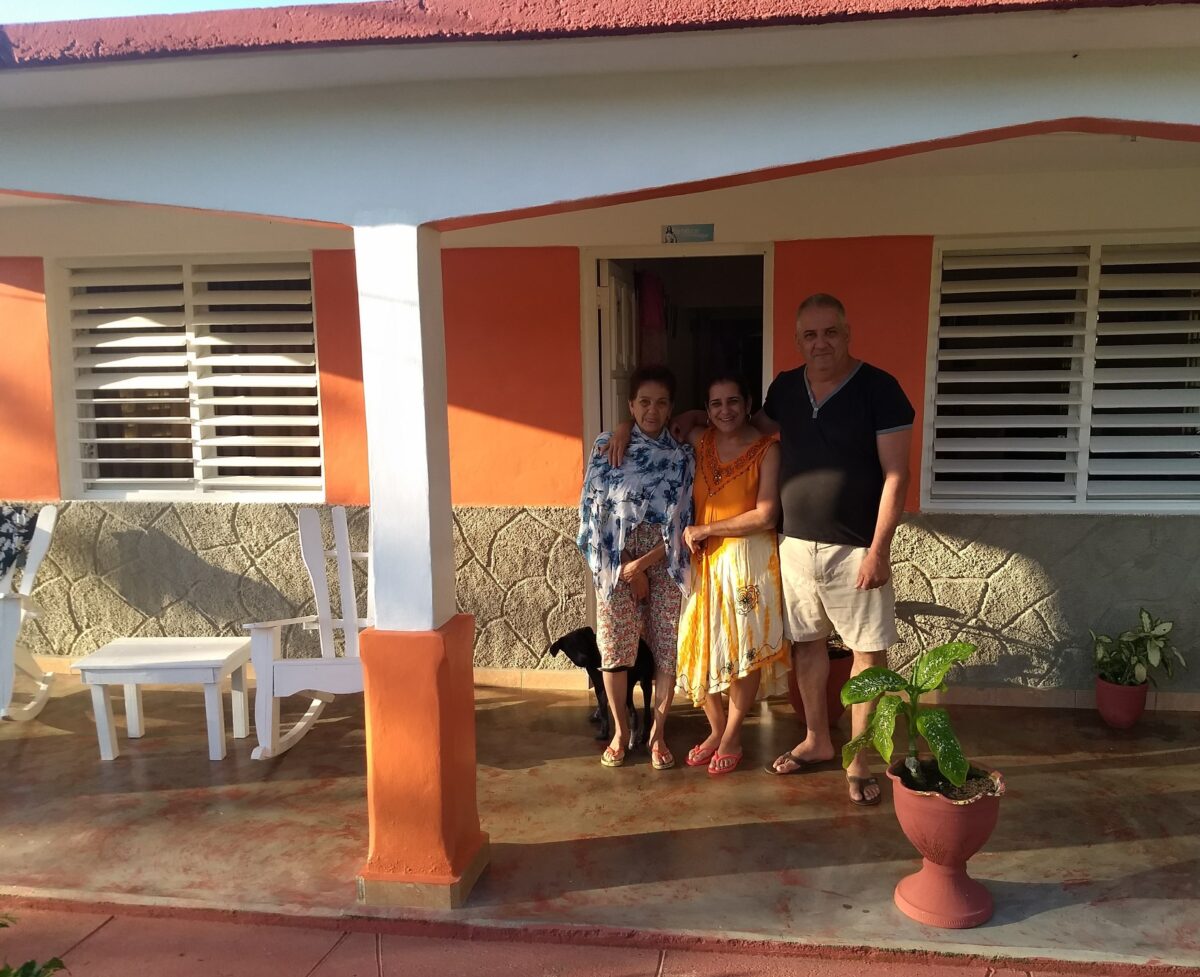
Over days and coffee we learned about Nancy’s family. She lived with her mother and her brother in this neat tiny orange house, where they all took part caring for the home, the animals, the visitors, the cooking. They were a pretty picture of cheer and hospitality. She told us about her two children, who long ago had both died of Tay-Sachs disease, about the husband who had left her with sick and dying children. We learned she kept an eye out for all the children in this out of the way, back of the beyond neighborhood, because she loved them, and could never stop missing her own. Elaine had brought small toys and stuffed animals for any children we met, and she presented them to Nancy, who happily assured us she could pass them all out in no time. She insisted on keeping one stuffed animal for herself–a monkey about the size of a small infant, with long arms that would clasp around your neck. That night as we talked she clasped its arms around her and hugged it in her lap like a baby.
I had no idea about the amount of voting that happens in Cuba. There are regular municipal and provincial elections of folks to local and national governing councils. Just not, of course, for presidents, in the way we do it. While we were there, Cubans voted on a new constitution. Propaganda for a yes vote was everywhere in Havana, but we saw none of this in the countryside.
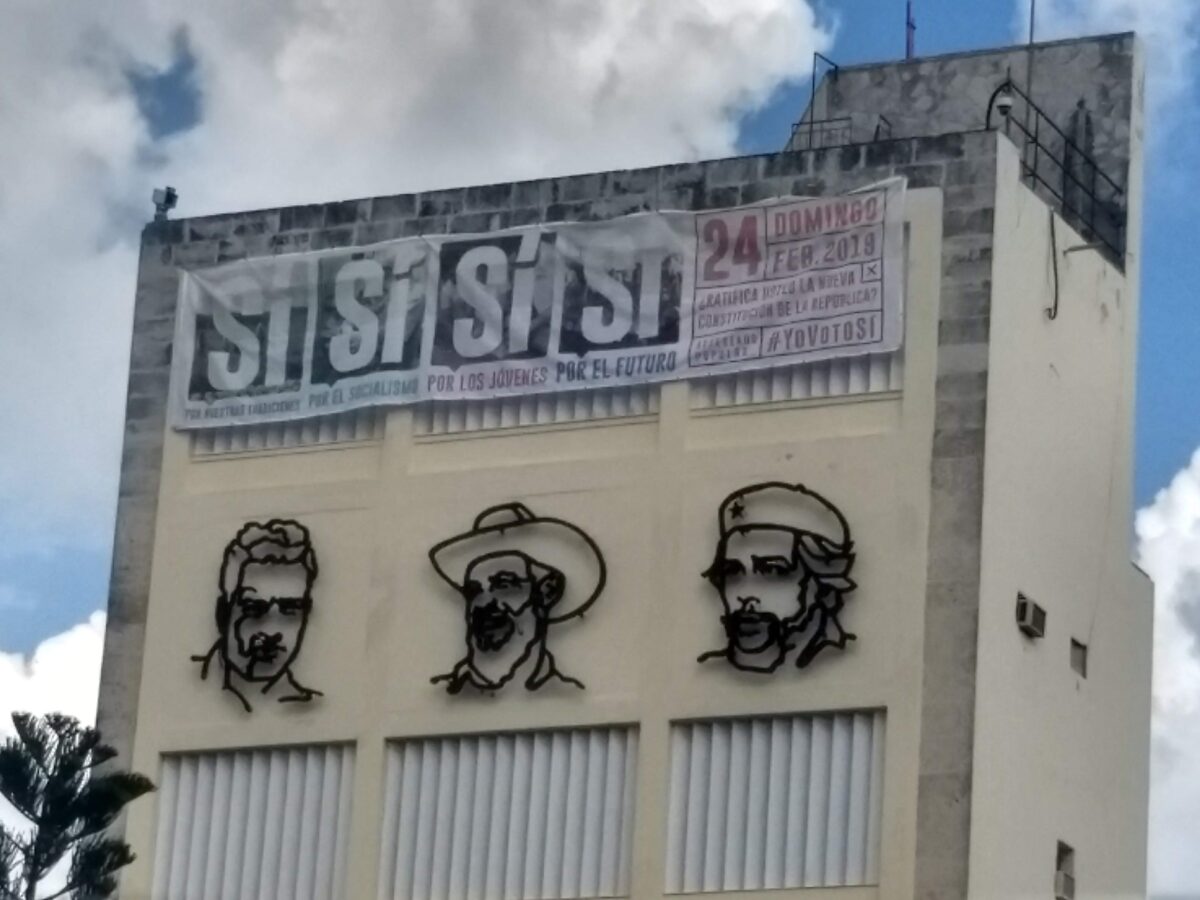
Nancy spoke reverently of the obligation to vote. City people were more jaded. I asked everyone we met if they were planning to vote, and the younger ones rolled their eyes and sighed. “Why would I vote if the question’s already been decided?” I definitely had some sympathy with this opinion, having lived in Chicago for the last 30 years. The new constitution certainly seemed like something younger people would be interested in approving, as it allowed for private property, imposed presidential term limits, banned discrimination, enabled same-sex marriage, and introduced judicial reforms familiar to us like the presumption of innocence and the right to legal counsel. The 90% yes vote on the referendum testified either to the popularity of the reformed constitution or that its passage was indeed a foregone conclusion.
Despite this new constitution that sounded both so democratic and so progressive, Cuba had been tightening the screws on one particular group of people for at least a year. And in January 2019, further restrictions were announced on this group: artists, the pride and glory of Cuba. Havana is literally covered in art–murals on crumbling walls, pictures on doors, whole avenues filled with paintings, sculpture and mixed media pieces, an entire neighborhood covered in mosaic.
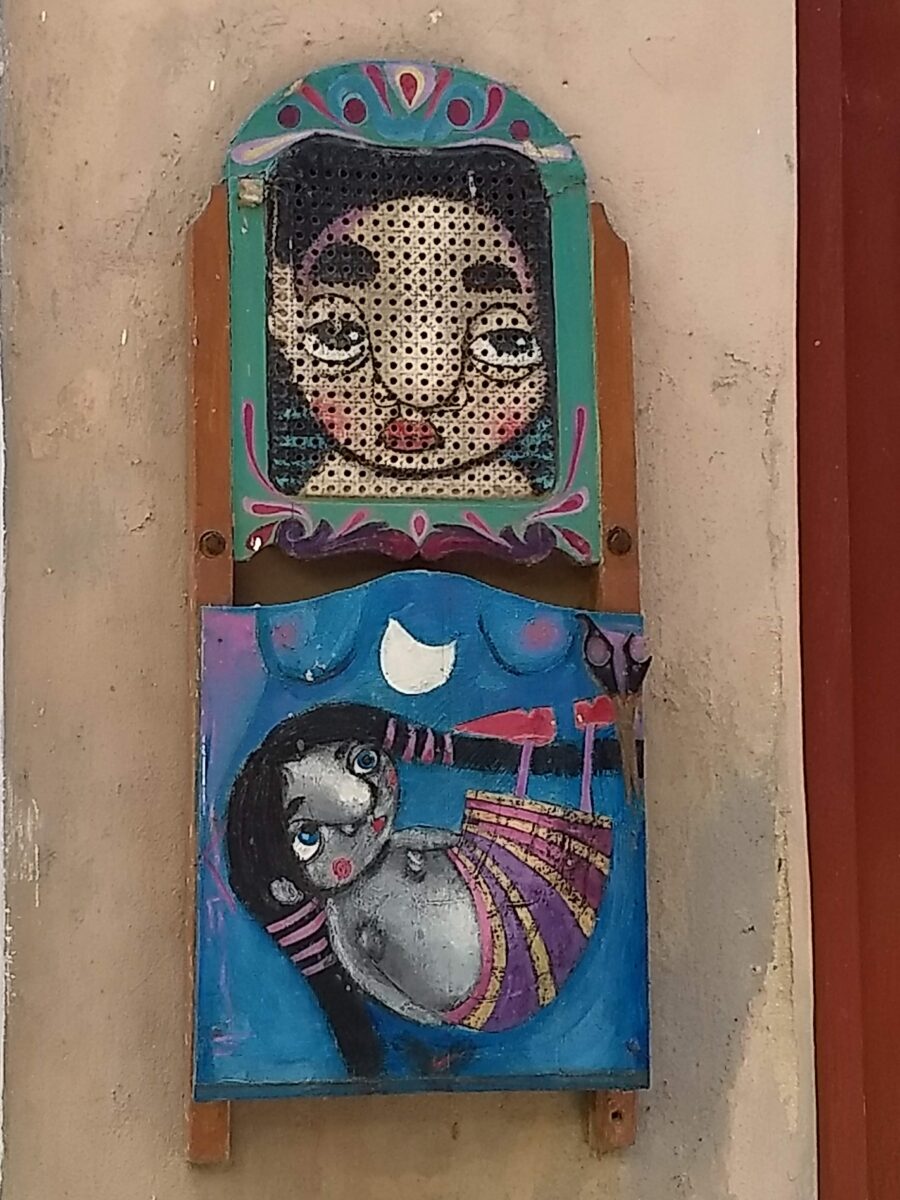
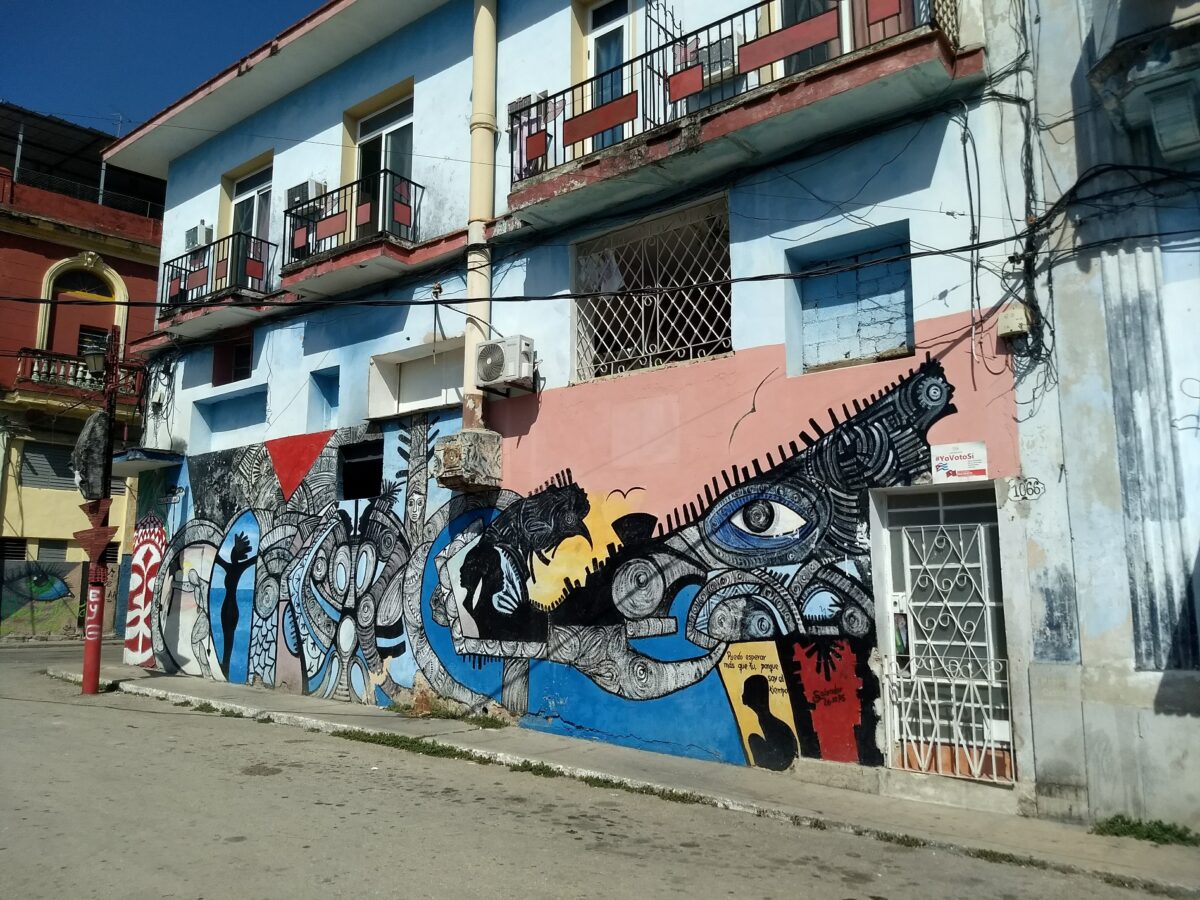
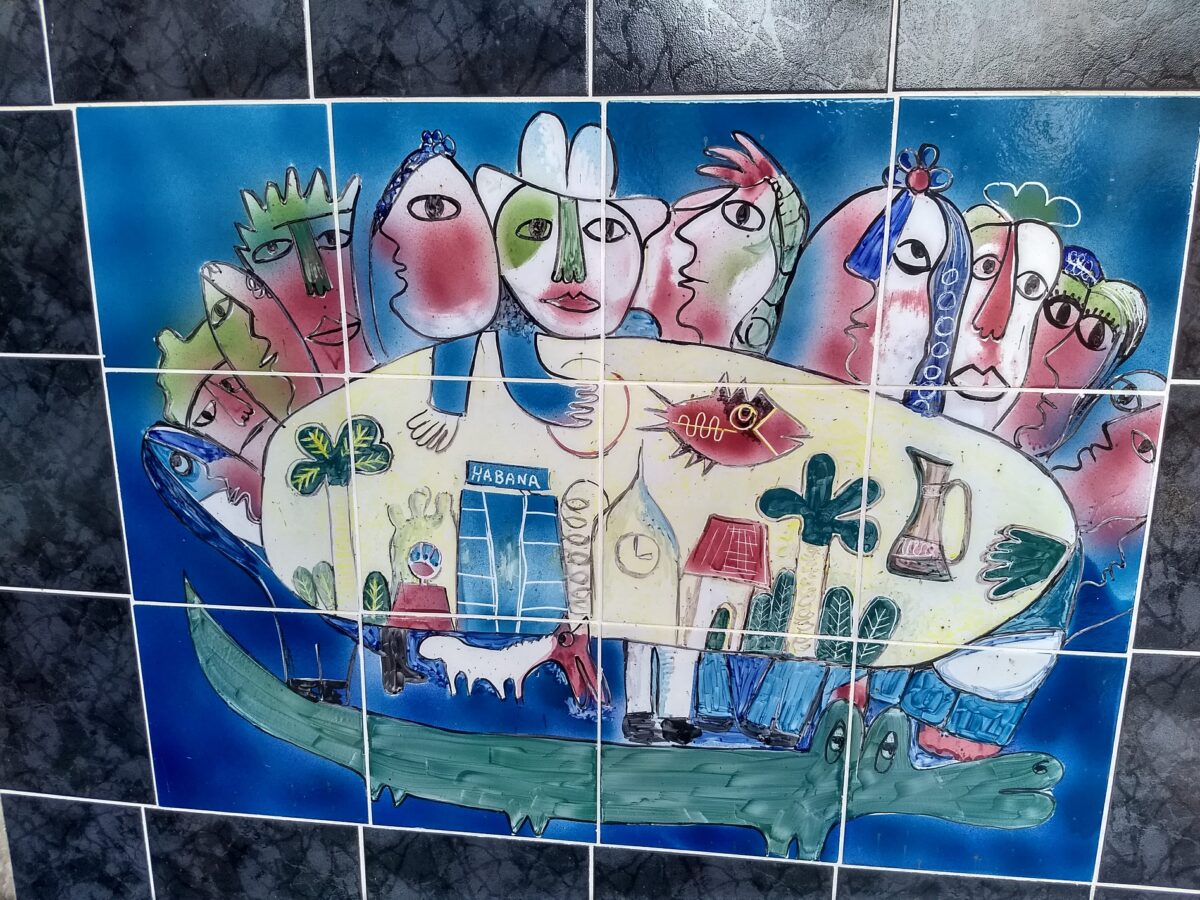
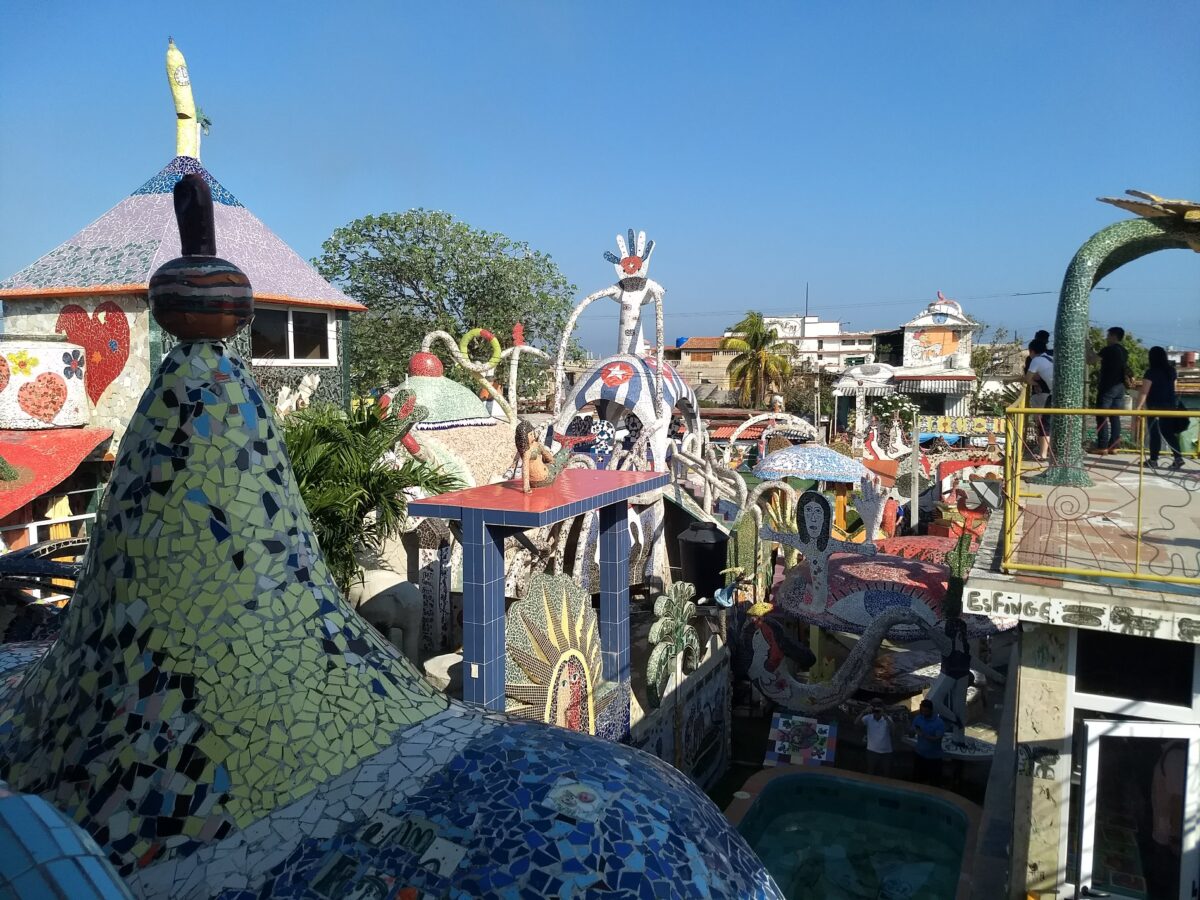
Music is everywhere in the air–from Mexican mariachis, oddly out of place, to street drummers, to large ensembles doing Buena Vista Social Club covers in Havana’s beautifully restored plazas crawling with tourists from all over the world.
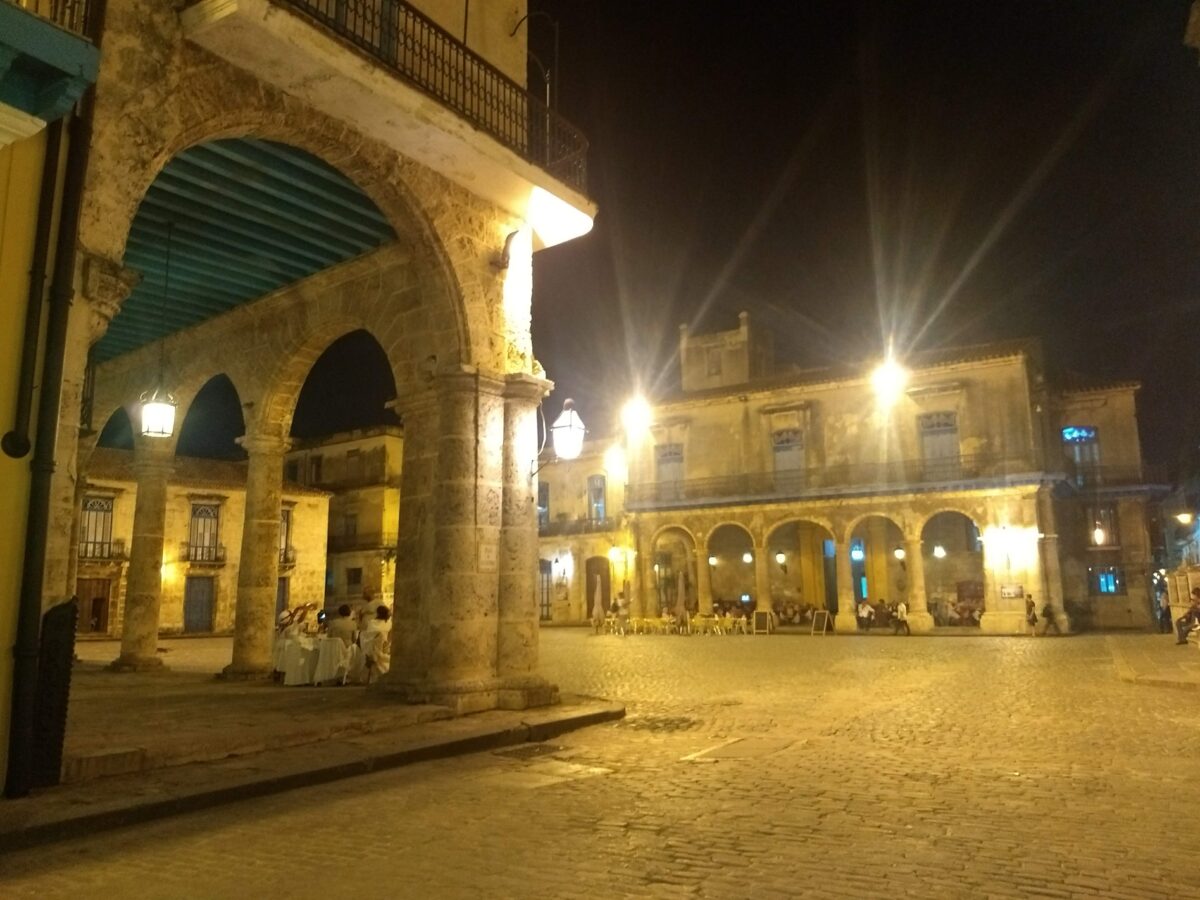
The government was now handing down dictates that art couldn’t be vulgar, must be patriotic, and must not conflict with the Cuban agenda, whatever that meant. And artists were suddenly being arrested. Now this was not a new problem in Cuba; it’s just that when the government tried this before in the 70s–known as the “gray 5 years” or the “dark decade” depending on how you count–most of their writers and artists left the island, and belatedly the powers that be realized that they had just committed an unforced error. Losing a generation of some of the world’s greatest artists was a blow to their global standing. Cuba backpedaled on policies against artists after that and left them basically free to create; slowly the pool of great writers and visual artists, performance artists and composers returned. But around 2018, instability and change in national leadership brought out this new clampdown on artistic voices.
It was against this frightening backdrop that I visited a small collaborative Havana studio with the purpose of making art. Not only was I going to learn a project with the resident artists, I had brought with me all that was needed to teach them how to make homemade paper. Of course, I did not know, when I packed up the plastic bin, the screens, the racks, the sponges, and the blender, that water was rationed and had to be carried to upper floors from cisterns in basements; I did not know that “used paper” was really, really not a thing in Cuba. Paper at all was a rare commodity; artists who got their hands on any would soak it to get the ink off of it, dry it out, and use it, again and again. But I had brought about a ream’s worth of old colored printer paper, and my host artist Leo was delighted with learning how to make new paper out of old, despite my mortification about the reckless amounts of water needed, and my gesture-laden, flustered Spanish.
He had a friend in the studio that day, another artist, a fire dancer. After I finished demonstrating papermaking, we watched a quite alarming video of his fire dancing, and after that it seemed to them the perfect time for Cuban coffee. (It usually was the perfect time for Cuban coffee.) Leo brewed us three small cups in the usual way, but served them in tiny paint jars instead of the typical china cups. Over coffee he explained his particular art–block printing. But Cuban artists certainly didn’t have linoleum blocks to work with. They used the bottoms of old shoes, or, preferably to Leo, PVC, which came in flat tiles and could be scavenged from construction sites. He showed me his largest piece–an intricately detailed 6 foot tall abstract block print of a woman filled with folkloric and mythic symbols in bold blacks and reds that should’ve been hanging in a museum. I asked to see any other work he had, and we went through a couple of portfolios of his prints.
While he taught me how to do a block print with a piece of scavenged PVC, he told me about his art education and his goals, saying it was hard to get visibility, young as he was. I asked them both about the new crackdown on artists, Decree 349. They said it was bad but there was little that could be done; your entire career–shows, sales, gallery representation–depended upon being approved by government censors. It was hard to stand up against this. But they both agreed that it doesn’t work to censor artists. Art never really stops.
This has proven true. Several arrests of Cuba’s most high profile artists in the time since we were there have only created massive protest movements. A few artists have even been released as a result of all the noise.
But all that was some months in the distance when I visited Leo in his studio. At that time he and his friends were walking a fine line between integrity and safety, trying to do side hustles with tourists like me while having enough time to do their own art and their “real” jobs, not to drown in poverty and to simply survive. And somehow, then, they were managing all that.
Balancing privation and creativity, independence within constraints, entrepreneurial hustle in a culture of solidarity–this was everyone we met in Cuba. Making do with unfathomably little, making something out of nothing, producing under circumstances we couldn’t even imagine dealing with here. Cubans impress even the most casual observer with their creativity, their hustle, their stoicism. To me Cuban coffee exemplifies this character. In a culture of privation it is omnipresent. Just a tiny amount goes a long way–you’ll never see a Starbucks venti size Cuban coffee. It is always a communal event, generously shared, and while there are strong traditions that dictate the process, each person adds their own personal creativity in how they serve it.
We had two opportunities to buy coffee beans to bring home, and I really wanted to do that. Cuban beans are grown virtually organically because pesticides are a completely unaffordable luxury. They are grown on small farms and homesteads and roasted perfectly. It was the ideal souvenir. Our first chance to buy it was during a horseback ride to a coffee and honey farm. We got a chance to nibble fresh roasted beans, buy them by the pound, and taste and buy small jars of the gorgeous amber honey. Although I wanted both, it seemed to me frivolous and imprudent given how little spending money I had left. Most folks bought something, and it turned out to be one of those times where I left kicking myself that I didn’t. But all hope was not lost–we would have a few more days in the city and we would likely find coffee beans there.
Sure enough we found a coffee bar on our very last morning that happened to roast and sell beans once a week, which was the day we were there, and as we sipped our coffees I watched the man at the counter scoop freshly roasted beans while a line of locals purchased small paper bag after bag. I watched the pile of bags get smaller and smaller and I realized I better get up to the counter myself. I got there while he was ringing up the last bag and I asked, when will there be more? And the man said, next week. Are you sure? I pleaded in my most pathetically entitled American moment in Cuba. Can’t you roast some more now? He briefly looked heavenward and impassively shook his head no, and I shuffled sadly back to my seat. This had been our last chance to find coffee beans.
I didn’t lament for too long my failure to bring coffee, or honey, or even rum or cigars home, and I forgot about it really after a few weeks. It’s easy to find such products here, even if they aren’t exactly the same. I ended up buying my own special pot to make Cuban coffee and studying how it is done on youtube. But a little news item came to my attention some time after our return that brought me back to the organic farm, and the tireless farmers with their endless side hustles. An American traveler returning from the Caribbean had been detained by American customs officers, and was being held in jail because he was carrying a likely illicit substance. He was smuggling drugs. It took customs officials 82 days to test the substance to determine what illegal drug it was. What this man had brought back, what took 82 days to test while he waited in a jail cell, this American green card holder who happened to be a black man, was a bottle of liquid island amber, honey.
3. Birdwatching in a postapocalyptic peaceable kingdom
We booked a birdwatching trip and a few days’ stay in the Pinar del Río region in the western part of the island. As decidedly unserious birders who barely knew anything about birds besides that they are cute, we knew we wanted only a little bit of birdwatching.
Cuba is a worldwide destination for serious birdwatchers. There are 362 bird species on the island, 27 of which are endemic. It’s easy to find birding tours that last weeks or a month, so I was happy to find one that was slated for three hours, and included transportation there from Havana, plus a meal at an organic farm afterward.
We rode from the city in an ordinary small SUV that was absolutely the lap of luxury in Cuba–air-conditioned!–passing several cars broken down at the side of the highway, mid-century classic American cars or little Soviet Ladas dating from the 70s and 80s, and a few plodding, ramshackle buses filled to overflowing, passengers and possessions alike leaning out windows. I had read over and over how hard this small trip–2 hours on the highway into the mountains–could be, how long it could take, how many vehicles could be required as one after another broke down and passengers waited for someone else to carry them further. Our driver was friendly but not chatty, and dispensed with my questions in as few words as possible. Who were all those people at the side of the road in random spots? They are waiting for rides. How long do they wait? A long time. Do you ever stop to pick them up? No. Are you voting in the upcoming election? No way. He didn’t like coming to the city very much, shared his love for Viñales, the Pinar del Río region’s main town and his home, and visibly relaxed the further we got into the countryside.
Our journey concluded without event–no stalls, no breakdowns–and we pulled up to a charming hotel. This was, of course, not where we would be staying; in fact we could not, because we were from the U.S. It is illegal for Americans to “support the Cuban military” by staying in government-run hotels, which is to say all of them. Visitors from the U.S. depend on the private, side hustle tourist economy and stay in people’s homes.
We met our birding guide Francisco here, and the driver then drove the three of us down a winding road until the guide said–Stop here!–and we stepped out into the quiet of the pines. The guide led us off the road, through a gate, and down a rocky path, springing almost noiselessly through the terrain. Small and energetic, he would tell us excitedly in good English about the bird he just heard and which would soon come into view. When he spotted one, he would point, and inevitably we wouldn’t see the shining quarry. He then would scoot right next to us, line up our sightlines with his, almost cheek to cheek, adjusting our binoculars, and point his outstretched arm toward the bird. Still no luck. Look! Look! his whisper grew impatient. And also: Quiet! Quiet! And finally, we’d see the bird as it would take to flight and soar out of the tree.
We checked off endemic and rare bird after bird from a list we hadn’t even known about: the Cuban trogon, absurdly bright blue, white, and red–a national bird the colors of the Cuban flag; the Cuban green woodpecker, about 10 inches high with a shock of red on its head; the solitaire, the grasquit, and the vireo, all endemic songbirds; the pygmy owl; the 20-inch-long, carnivorous, Great Lizard Cuckoo, and many others. The Cuban emerald hummingbird posed for us for nearly five minutes in the lowest branch of a pine, overhanging our path through a meadow. We saw its tiny silhouette clearly for our entire approach; when we drew close we could see its glossy jewel coat gleaming against a spectacular sapphire sky.
Francisco was annoyed by another birding group we passed, whose non-Cuban guide was using not only recorded bird calls to beckon birds, but laser pointers to sight them. Our guide felt that this was very bad practice and harmful to the birds; loyally, we felt the same.
He brought us off the path in an effort to find the prize bird of the afternoon–the Cuban tody. Maybe an hour passed clambering over rocks, ascending, descending, backtracking, maybe more. No tody. Francisco headed for one more spot where he felt sure we’d find a tody, exiting the pines. By this point we were hot, altogether done with birding, and ready for a cool drink and lunch. I was thoroughly over the allure of a tody. But still the guide persisted. We passed through meadows and walked along the borders of farmers’ fields.
Francisco paused at a field so weedy it scarcely looked like a farm plot, and he explained to us the Cuban farming practice illustrated here: the small, deceptively unkempt field was planted in both beans and corn right on top of each other. The corn would come up and draw the birds and pests away from the beans, which would grow up and mature safely under the protection of the corn. He said: this is how we do it here, we work with nature, we don’t use pesticides.
And this is the case not just for Pinar del Río, an isolated mountain region; it is the case for the whole country. When the Soviet Union collapsed, it was unable to support or trade with Cuba any longer. Having lost its source of almost everything, the island nation with few of its own resources was dropped into catastrophic poverty almost overnight. Cubans call this–strangely to my ears–the Special Period. Both petroleum and chemical pesticides, greatly relied upon for Cuba’s then Soviet-style, large-scale farming, became scarce. Whatever pesticide supply remained eventually ran out. And by 1993, the agriculture industry was in crisis, with no fuel to spare for tractors and no weed killer or pesticides at all. And it was at this juncture that a group of Revolution-devoted Australian communists, the Solidarity Brigadiers, who had been making annual pilgrimages to their favorite revolutionary republic for several years, decided to teach Cuban farmers permaculture, organic farming, and a return to smaller scale, ancient methods. Over decades, farms got smaller and sustainable; urban rooftops began to be places of cultivation. By now, growers have become expert in warding off crop hazards of all kinds without chemicals. Many rural Cubans grow fruit trees and their own coffee plants, and many are small-scale beekeepers who have figured out how to stave off disease and mite problems in their hives without chemicals of any kind.
This is, to be sure, not an easy and definitely not an efficient way to farm. But now, everything grown in Cuba is organic by default.
Before I knew any of this, I asked different folks about Cuban bees. I don’t know why; I was just curious. I put it in my limited Spanish: Were bees in Cuba also suffering the mass die-offs that we had in the U.S.? The looks of horror this question generated made me wonder if I had somehow accidentally asked if they typically preferred an ax or a gun when they committed a homicide. After loud protestations to the contrary, they would turn the question back on me–Are you telling me your BEES are DYING? By which point I would want to rewind the whole conversation a few minutes and forget I ever asked. The shame I felt was as great as if I personally destroyed bee colonies for sport.
Here we were, just 90 miles from the U.S., amidst ancient farming methods, zero pesticides, and not a single collapsed beehive anywhere. I felt like we were on another planet.
We heard similar explanations of farming methods when we visited coffee, tobacco, and honey producers in the region. Coffee beans, grown mainly on small farms, mature in the shade of taller trees. Without fuel for tractors, farmers use animal power. You will absolutely see ox-driven ploughs on tobacco farms today. Farmers are proud of their highly-prized, low-tech, slow-processed tobacco leaves. And Cuban honey is now the purest in the world.
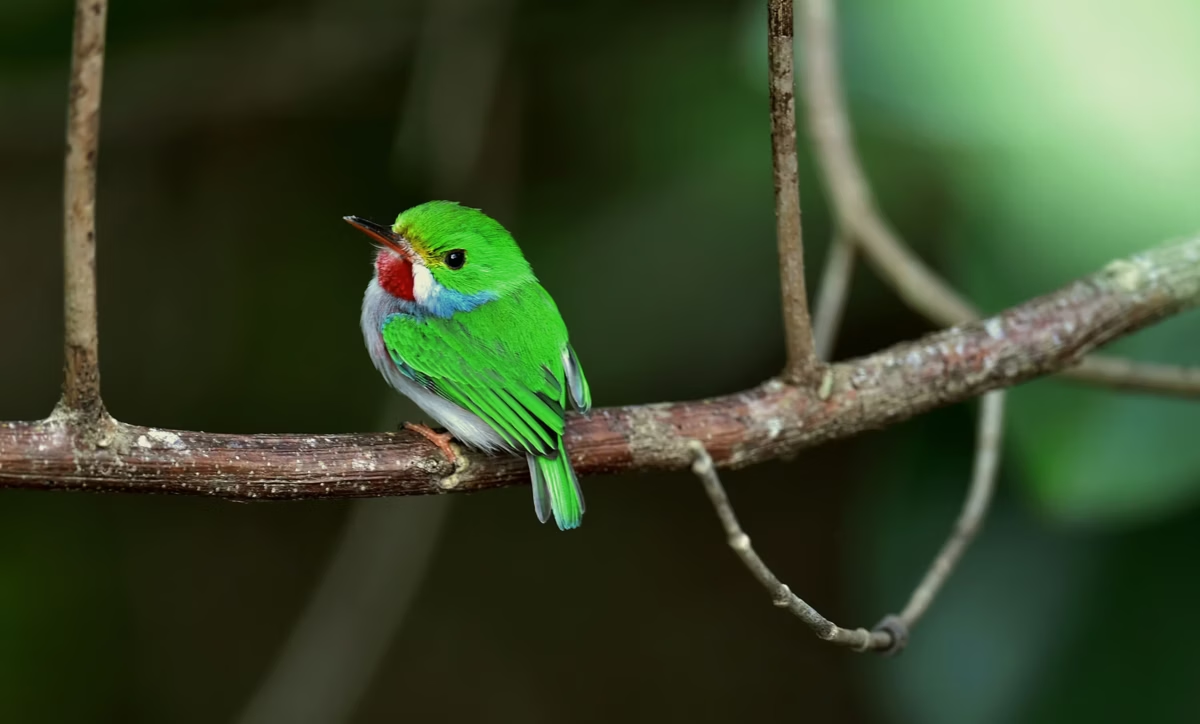
On our birdwalk I was just beginning to get a sense of what an alternate reality Cuban agriculture is. We walked past the farm plots and into another meadow ringed by low brush. And finally our guide heard the sound he had been waiting for all afternoon–the song of the Cuban tody–a tiny long-beaked bird shining like a Christmas ornament, glossy lime-green back, shimmering fuschia throat, blazing white belly. This bird was impossible to miss in the scrub despite its size. It looked like an electric light. The tody thoughtfully held its pose for several minutes for us to ogle it. Finally, our guide was satisfied and so were we. I never saw anything so gorgeous as this tody.
With the pinnacle of a tody sighting behind us, we were done birding and now it was time for our lunch at an “organic farm” or, more accurately, lunch at a farm. A large table was spread on an outdoor covered patio; Francisco joined us along with farm workers and friends from nearby. We had no idea how to fit into this gathering socially really, but the fact of the matter was, we were there to eat, and that was easy. Here, like everywhere, the food was simple and delicious, with slow-cooked meats in abundance, and tiny little tasty red beans, presumably the type we saw growing in the field. For dessert we were introduced to the “ice cream fruit,” the cherimoya: leathern, green, scaly on the outside, and–dissonantly–creamy, smooth, and sweet on the inside. Our hosts knew we had never seen or tasted anything like this and watched us with smiles as we scooped out the soft flesh with spoons.
Just beyond the low patio wall strolled turkeys, chickens, and roosters, hopping into trees or settling comfortably in the shade. Here, and elsewhere in Pinar del Río, chickens and farm dogs wandered sociably. These country dogs were different from their disconsolate city counterparts. They were friendly, active, waggy, free-roaming. On a horseback ride through tobacco farmland the next day, an occasional farm dog would join us and follow along for a while, then veer off to return to their fields and visit the oxen, then run off to find some goats.
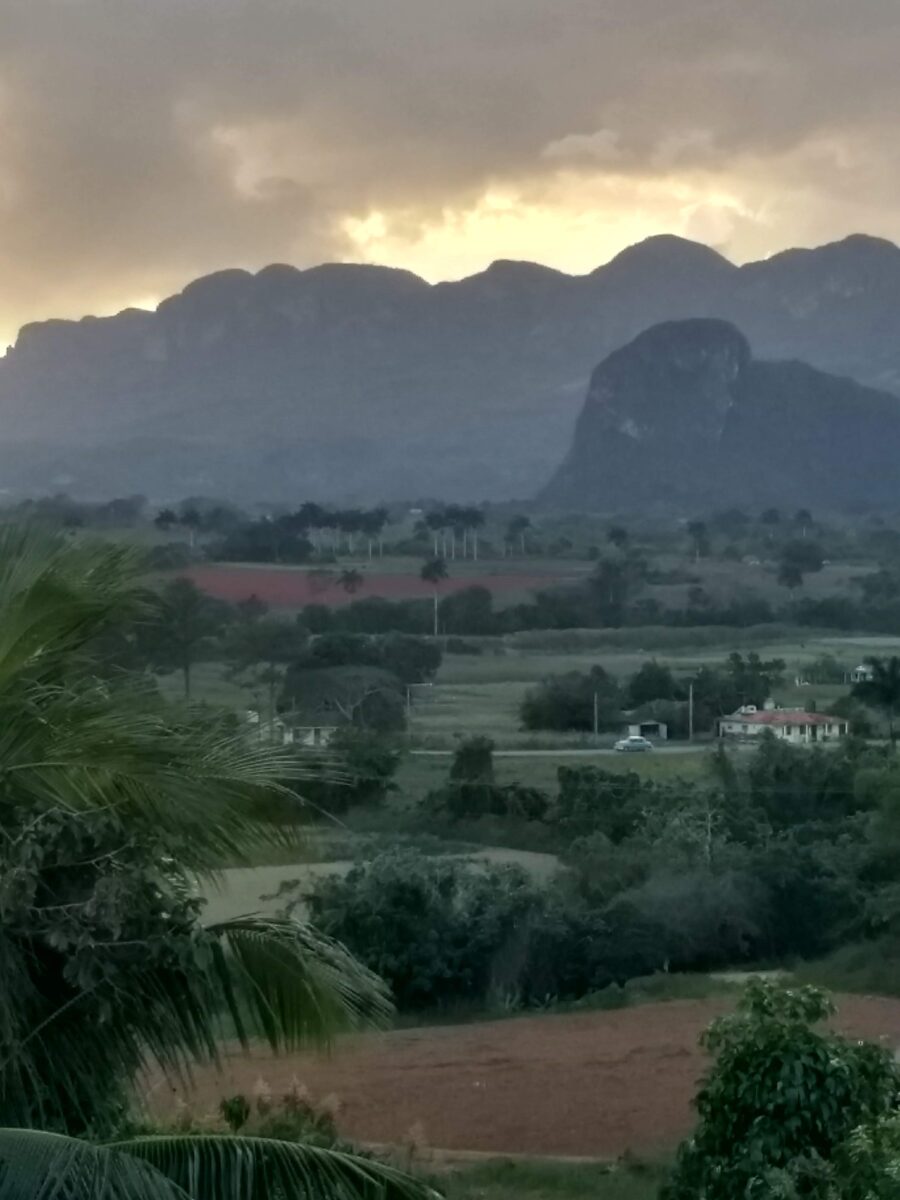
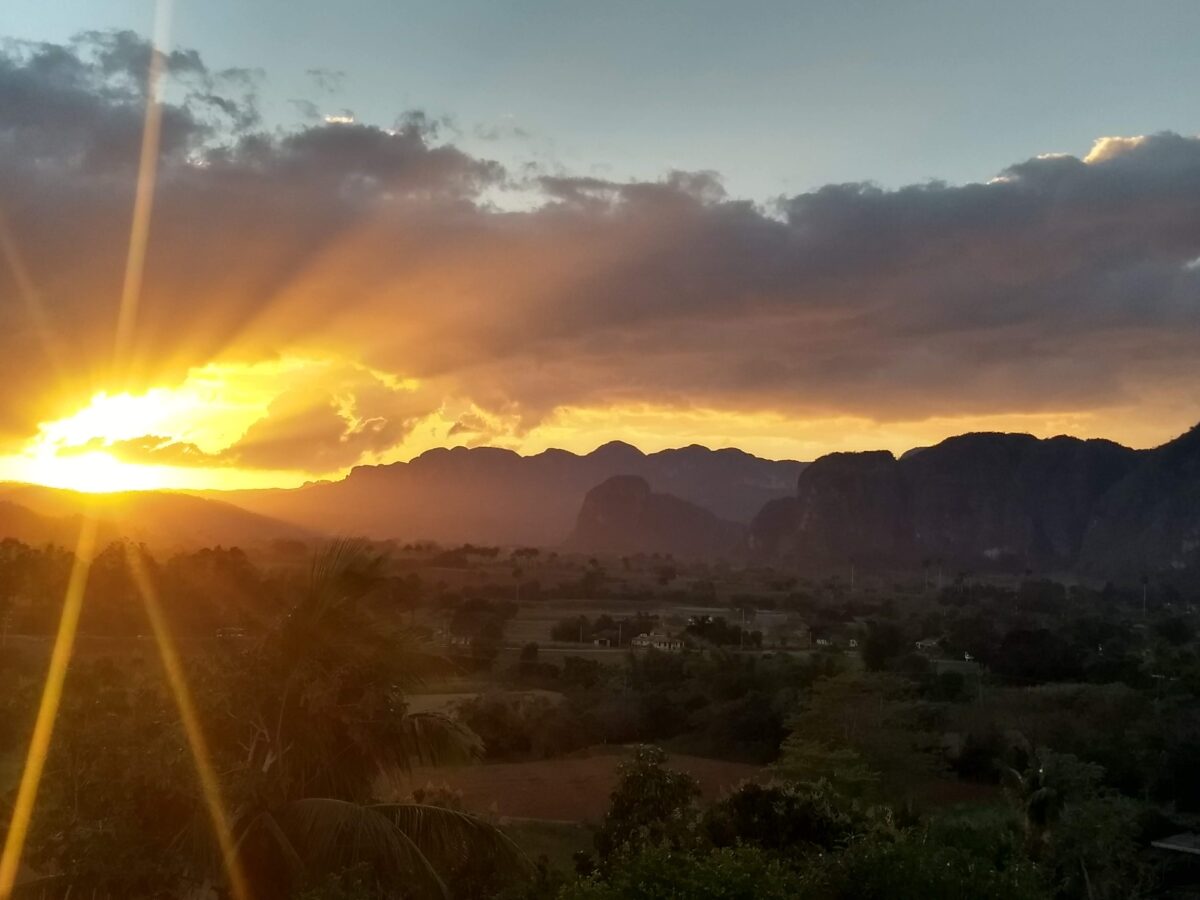
The farmlands around Viñales were a peaceable kingdom and we could see why our birdwatching tour driver preferred it here. It seemed more restful than any other place in the world. Our horseback ride took us not only through farmlands but wound among the unique mountain formations called the mogotes. Straight sided and gently curved on top, iced with vegetation like enormous green panettones, mogotes exist on earth only here in this valley, jutting straight up from the flat fields. It was an utterly quiet and breathtaking route.
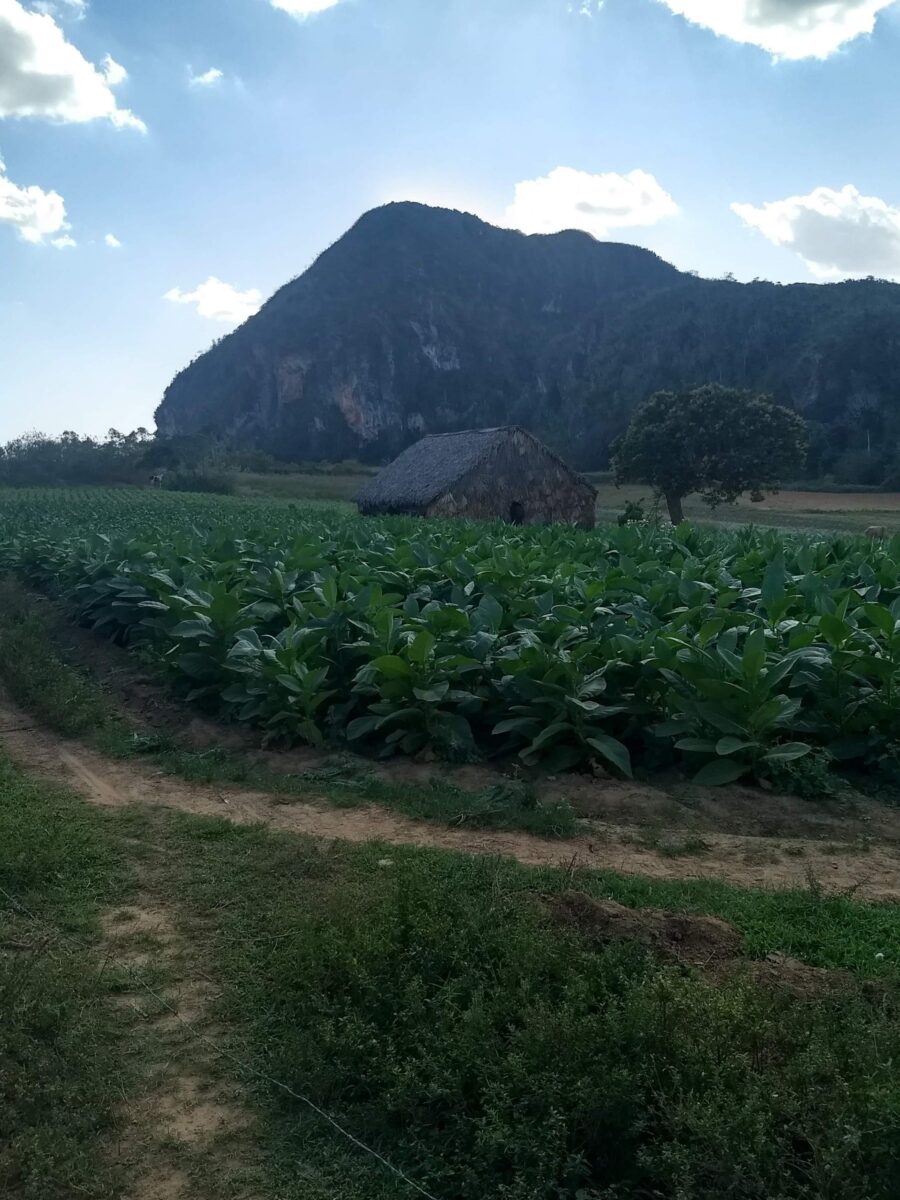
On our return leg of the horseback ride we stopped at a farm to learn about tobacco processing. We had dawdled too long swimming in a lake and now it was gathering dark.
The farm had limited electricity and was out of it at this hour. In the dusk we were led into a corrugated tin-roofed hut where, illumined by someone’s cell phone flashlight, a young farmer explained to us how leaves were harvested and dried, and an old farmer demonstrated rolling a cigar.
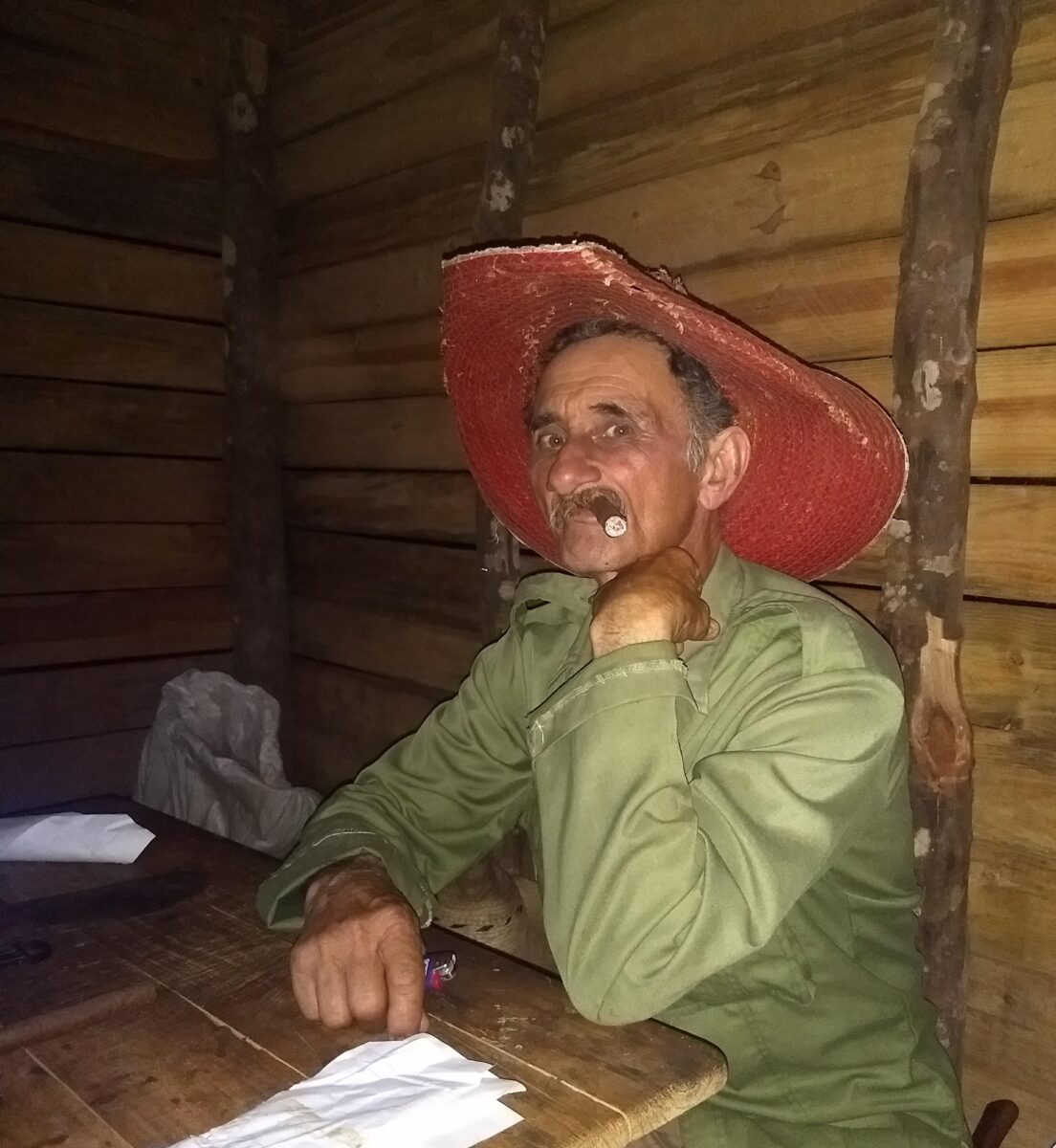
From somewhere in this darkness came the improbable peeps of tiny chicks. Beyond the ring of cell phone light, not a foot away from me, was a mother hen guarding her new chicks–huddled in the corner beneath my bench and completely invisible. The farmers knew she was there and were happy to offer her shelter. She did not bother their tobacco drying operation.
We returned to our horses in the pitch dark. When we had all mounted with the difficulty you might expect, the horses knew exactly what to do and where to go, and they formed their line, clip clopping quietly. The wrangler, a soft spoken man who had told us all kinds of local plant lore on the way there, now rode up and down the line, whispering to his horses, calling them by name. There was not a single electric light to be seen and though the sky was brilliant with stars you could only see a few feet in any direction. It would have been easy for me to panic. I had to make a conscious decision not to think about, say, a cougar jumping at my horse from out of the brush (I would only see his glinting eyes, just before he sprang). Because I knew this: never again in my life would I find myself riding a mild, calm horse through a pitch dark night in a rural farm valley ringed by peaks, soundless except for the occasional cricket song, hooves on sandy soil, and a Cuban cowboy whispering to his horses. I let the cool and the peace of this darkness in this valley wash over me and embrace me.
The peace I felt here was unquestionably born of poverty and want. There is no denying this fact. Cuban organic agriculture exists as it does solely because of economic and social collapse: it is a post-apocalyptic solution. But it is a solution that has showered benefits on the land, the plants, the insects, and the animals, and, one suspects, the people too. The little mountain valleys of Pinar del Río lack most of what we count on every day, and contain answers for much of what we lack.
Love watching you travel the world. Share your on-fire alarm at the current state of Cuban affairs, and the greedy orange paws.
I honestly am not sure what the aptly-described paws are grasping for beyond domination. What can he want in this place of broken beauty whose chief resource is the people? Baffling. But anyway, thanks for reading and commenting!
Beautifully written! Thank you for this look into a place most of us won’t be able to visit. Our country needs to stop persecuting Cuba!
Thanks for stopping by and for your kind words, Stephanie! I think you used the perfect phrase–we need to stop persecuting Cuba.